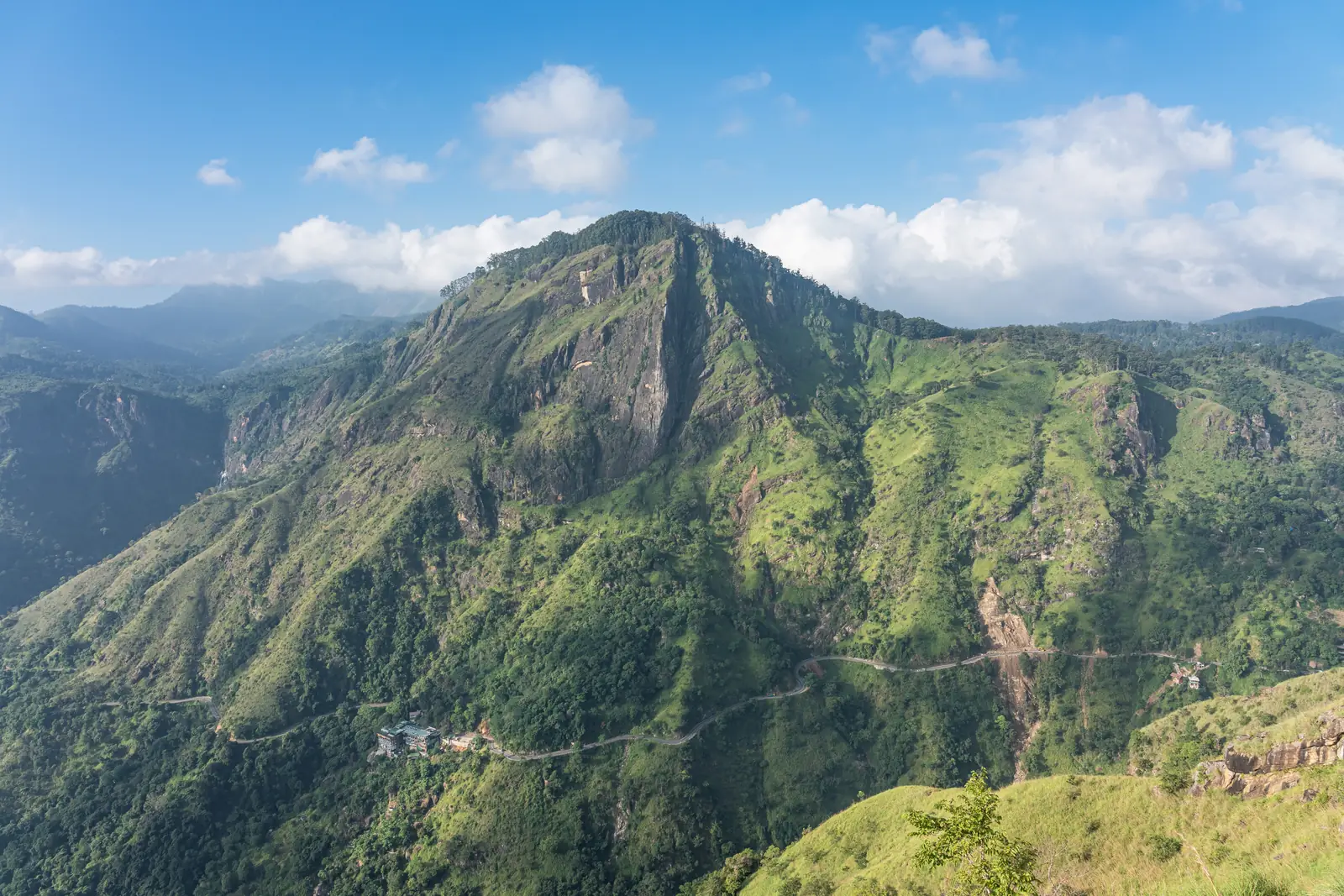
Sri Lanka is roughly the size of Ireland, which fools a lot of first-time visitors into planning too much. The distances are short and the journeys are not: mountain roads switchback, lowland roads run through one continuous village, and an average of 40 kilometres an hour is a good day. The single most useful planning habit is to take whatever a map tells you and add half again.
The train
Trains are cheap, scenic and slow, and on the hill-country line the journey is the attraction rather than the transport. Reserved seats open 30 days ahead and the observation carriages sell out quickly in December to March. Unreserved tickets are sold on the day, cost very little, and guarantee nothing but entry - in peak season that can mean standing for hours, which plenty of people enjoy more than they expected.
The bus
Buses reach everywhere the train does not, run constantly, and cost almost nothing - a three-hour journey on a red government bus is well under two dollars. The private intercity coaches are faster and air-conditioned for a little more. The trade-off is comfort and, on hill roads, nerve: Sri Lankan bus driving is committed. Sit towards the front if you are prone to motion sickness, keep your bag on your lap, and be ready to flag the bus down rather than wait for it to stop neatly.
Tuk-tuks
For anything under about 20 kilometres, the tuk-tuk is the answer. The important habit is to use a metered one or an app rather than negotiating: PickMe is the local ride-hailing app and Uber operates in Colombo, and both remove the haggling entirely. Where you must agree a price, do it before you get in, and expect to pay a modest premium as a foreigner outside the app network. Some drivers will offer a full day of sightseeing for a flat rate, which is often good value and good company.
- ◆Short hop across town - a dollar or two on the meter.
- ◆Airport to Negombo - a common first ride, and cheaper arranged through an app than at the arrivals desk.
- ◆A day of local sightseeing - frequently $25 to $40 depending on distance and how hard the driver has to work.
A car and driver
Hiring a car with a driver is the standard way to see the island if your time is tight or you are travelling as a family, and it is far more normal here than it sounds. Expect roughly $50 to $80 a day including fuel, covering the vehicle and the driver's time, with the driver arranging their own accommodation. A good driver is a genuine asset: they know which road is washed out, which viewpoint is worth the detour, and where to eat. A bad one runs a commission circuit of gem shops and spice gardens. Agree the itinerary in writing beforehand, and say plainly at the start that you do not want shopping stops.
Driving yourself
You can, and most people should not. You will need an International Driving Permit endorsed locally, and more importantly a tolerance for an unwritten road culture in which the largest vehicle has right of way and the horn is used as a courtesy rather than a complaint. Scooters and tuk-tuks are widely rented in beach towns and are genuinely fun for short local distances. For cross-country driving, the cost saving over a driver is small and the stress is not.
Domestic flights
Short domestic hops exist, mostly seaplanes and small aircraft between Colombo and the coasts, and they are the one way to make the far east or the far north viable on a short trip. They cost a great deal relative to everything else in the country. If a week is all you have and Jaffna or Trincomalee is non-negotiable, it can be worth it; otherwise, the money is better spent on more days.
A realistic rule of thumb
- ◆Colombo to Kandy - about 3 to 4 hours by road on a good day.
- ◆Kandy to Nuwara Eliya - about 3 hours, all of it uphill and winding.
- ◆Colombo to Galle - around 1.5 hours on the southern expressway, or three along the coast road, which is prettier.
- ◆Colombo to Arugam Bay or Trincomalee - most of a day whichever way you go.
Build your route so that you are not moving every day. Two or three nights in each place turns a stressful trip into a good one, and our trip planner sequences destinations to keep the driving sensible rather than sending you back and forth across the island.